Ruth Feuerstein
Ruth Feuerstein
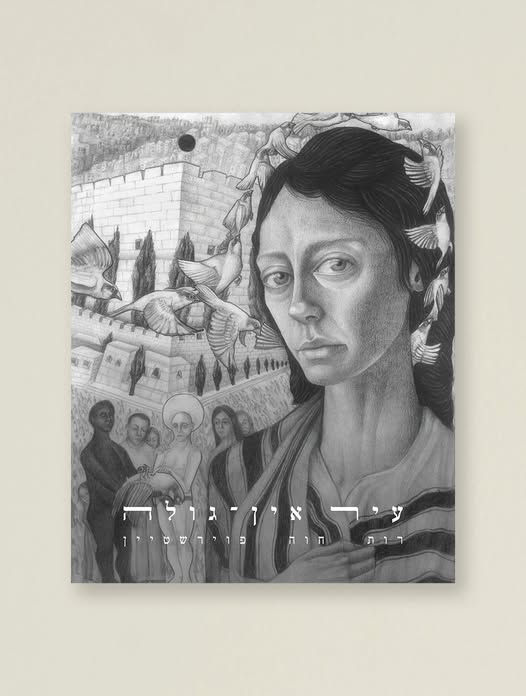
City of non-Exile
In her second book, “City of Non-Exile”, Ruth Feuerstein is presenting a prophetic poetry for our time: a new fusion of the sacred language and vision of Hebrew with the language of the present. Through the liturgical, rhythmic, and musical fabric of the poems in “City of Non-Exile”, Feuerstein creates a major perspective that serves as a platform for the shaping of broad political, spiritual, and social themes. At the same time, the most personal expressions and wounds are shaped through this major-key framework, so that even the voice of the destruction of the individual body and soul turns into the cry of the city being destroyed. Herein lies the innovation and significance of this book – Feuerstein renews a major poetic trend in contemporary Hebrew poetry that draws upon the sacred Hebrew language, while shaping it into a new poetic form.
"Ruth Feuerstein stands out as the preeminent major poet of our time. Major means ambitious, addressing issues at the heart of the world and the public, shaping a unique voice and making it heard on a grand scale. She is also, even at this early stage of her poetic mission, the most compelling visionary poet of her generation, an authentic heir to the tradition of prophecy. Not an oracle or a self-proclaimed messiah, not a mystic or a dreamer who mistakenly believes her visions are more important than those of others, but a prophetess of the kind who senses God's presence in her flesh, one who lives her spirit as a channel of abundance and her body as the physical embodiment of the nation and the times. Moreover, she is among the most gifted composers in Hebrew poetry being written today; that is, her major-key prophetic poetry powerfully sets systems of resonance in motion."
Tzur Erlich, 'Hashiloach', March 2026

The Book of Oblivion and Redemption
'The Book of Oblivion and Redemption', is a theological and poetic vision that narrates a symbolic journey between the layers of existence and divinity. Between a mother's womb, the abyss of an apocalyptic city, and a God afflicted by forgetfulness, hiding in His chambers. Jonah and the whale, a great mother, a choir of birds, Cherucim, cities, and trees populate the dreamlike and rich world woven by the vision, bridging the present and the individual soul with the echoes of the great time of Hebrew tradition.
In a musical and pictorial poetics, the symbolic life of 'the Ruth' - the poet's alter ego – is being narrated, in her journeys toward rectification following the profound disruption that left its mark in space and between times. In a dreamlike and wild visionary language, the personal drama intertwines with the crises of the world and the present, alongside images and fundamental issues that have driven Jewish thought and poetics since its inception: the question of revelation, the concealment of God’s presence, destruction, and redemption.
In its language and imagery, "The Book of Oblivion and Redemption" dialogues with the stories of Genesis, the biblical prophecy, the literature of 'Hechalot', the Zohar, and Hasidism, presenting itself as a living chapter in the Hebrew tradition of mysticism, returning mystical poetics to its source – as a radical religious interpretation of the events of time and human life.
"In poetry written today, the prophetic dimension is mostly absent. Even if in certain cases spiritual, religious, or even theological poetry is created, and in many instances poetry engages with religious sources, the prophetic ambition is still lacking in all of these. However, the origins of poetry in general, and Hebrew poetry in particular, are connected to the ambition to look at the foundation of the world, at the hidden space where present, past, and future are interpreted and clarified. "The book of Oblivion and Redemption" is a prophetic-lyrical play that depicts, in delightful Hebrew, a journey through a broken world where "the sun cries shadow" (p. 81) and "the king writes with his tears a book of oblivion" (p. 86). Biblical stories, Jewish sages, and Kabbalistic terms take the stage in which the chorus is a choir of birds led by a bird named 'Ziz-Shadai,' and its stage directions are poetry in themselves. The songs of the play, which in their way symbolize and interpret the present, that is, the reality of our lives, are dark and surreal, and through the rich, metaphorical, rhymed, and measured Hebrew in which they are written, they create a painful and astonishing reading experience."
Eitan Dekel, Hamusach, October 2024

Hitbasrut (Revelation)
"'Hitbasrut' ('Revelation') is a highly imaginative and daring experimental work that seeks to outline the foundations of human existence and the essence of life, both primordial and renewed, while returning to a traditional Hebrew form: the page of the Talmud. In this creation, the poet utilizes the familiar graphic layout from Talmudic texts. In the inner part of the page, the core poetic work is established: with meticulous meter, natural tempo, refined modernist rhyme, and soft melodies – the poet has created a linguistically virtuosic poem, shrouded in mystery and secrets in terms of its content.
The speaker, caught between the realm of dreams and the realm of prophecy – generates a textual and religious space where the written word plays a crucial role in its tangible connection to life and serves as a representation of the constant search for a new theology. The frantic quest for a God that maintains direct contact with the modern world, 'which secretes concrete from its groins' is articulated in this work alongside a historiosophic engagement with the people of Israel. The poem is written with exceptional momentum, and at times the reader feels as if it was written in a state of ecstasy or visionary trance.
Just as the Talmud page, where the Talmudic text is surrounded by interpretative text, so too is the poem 'Hitbasrut' enveloped on all sides by broadening and interpretative oeuvre: it is a magnificent poetic prose spoken by a female voice whose foundations are primordial yet belong to this era. The prose text also deals with questions of a theological order and expresses a search for a way of life that exists both through adherence to the traditions of the past and through recognition of a new Jewish time."
The judges' statement, Ben-Yehuda writing competition, 2024
